One NYC Curb. A Million Demands. A Safer Way Forward.
Every day, millions of New Yorkers step off a curb to catch an Uber or Lyft. It seems simple enough: tap an app, watch the car approach, hop in, and go. But behind that everyday moment lies one of the most contentious battles for public space in America’s largest city: the curb.
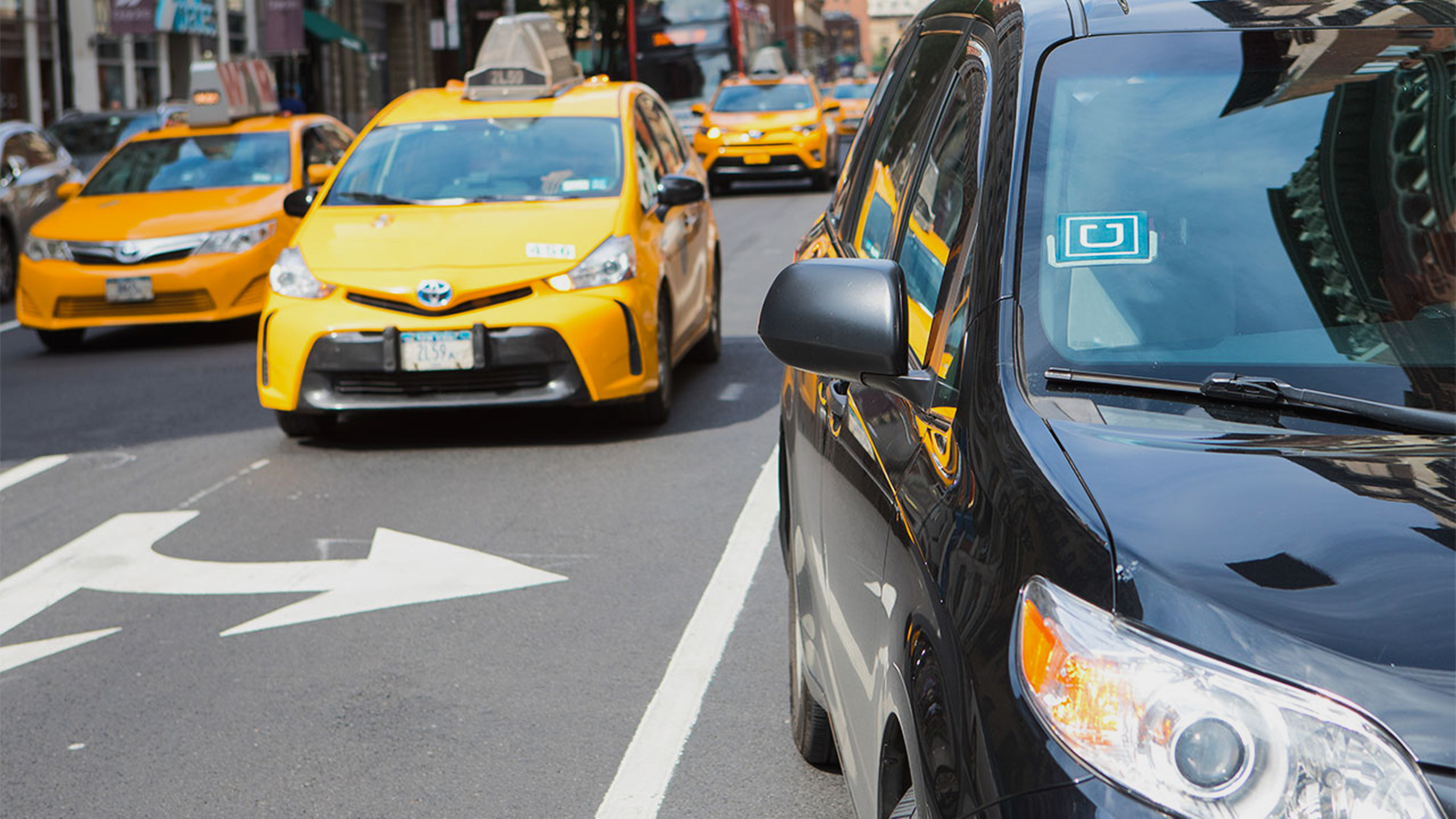
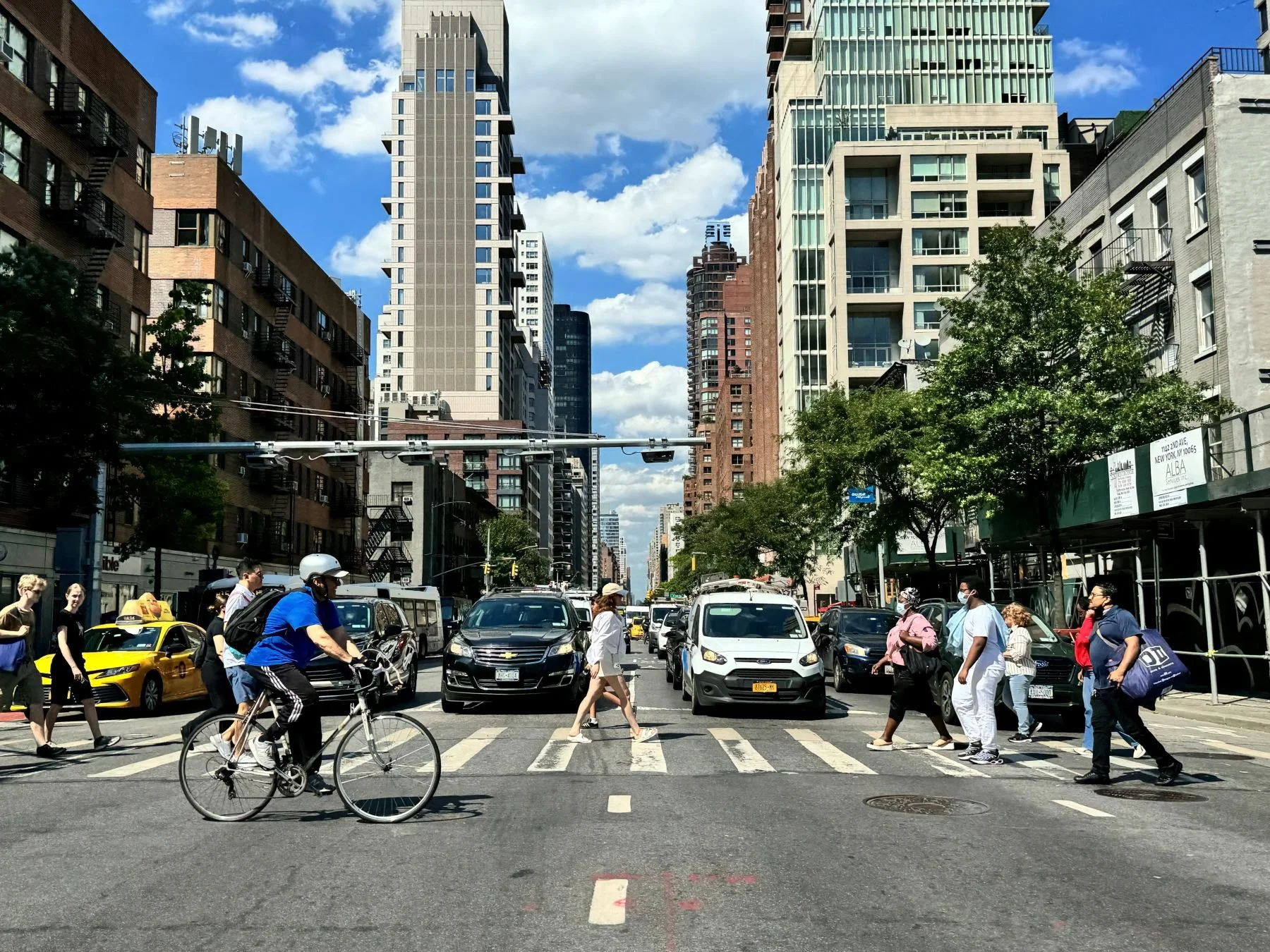
The curb is where buses need to pull over, where cyclists need protection, where delivery trucks unload goods, where pedestrians and those with accessibility needs navigate crosswalks, and where for-hire vehicles like Uber and Lyft pick up and drop off passengers. When these competing demands collide—and they do, constantly—the consequences include obstructed bike lanes, delayed buses, frustrated drivers, and in the worst cases, serious injuries and fatalities.
This is the challenge that brought UrbanSense to the NYC Taxi & Limousine Commission (TLC). Through Pilot Pitchfest, an initiative connecting city agencies with technical experts, we were engaged to develop a pilot proposal that could make curb-side pickups and drop-offs with Uber and Lyft safer, smarter, and more efficient.
A Problem No One Can Solve Alone
Starting in 2010, New York City started using a powerful data collection tool: cameras mounted on buses and streetpoles to detect bus lane violations, such as blocked buses and double parking. The numbers tell the story:
Between 2022 and 2023, these cameras recorded over 36.6 million conflicts across all vehicles in bus lanes. These conflicts ranged from blocking a protected lane, stopping in a prohibited zone, or creating a hazard for other road users.
The share of TLC-licensed drivers receiving multiple bus lane camera violations has been climbing year over year.
Despite multiple levels of enforcement that includes automated tickets and enforcement agents from TLC and NYPD, complaints against TLC-licensed drivers jumped more than 33% from 2023 to 2024. It’s clear that enforcement alone isn’t solving the problem. If drivers don’t have safe places to pull over, if passengers demand door-to-door service, and if the apps dispatch rides to locations that conflict with curb regulations, nothing changes.
Through interviews with more than ten different stakeholder groups and data review and analysis, we discovered something striking but perhaps not surprising– three completely different systems are operating simultaneously:
The designed system, which includes about 20 designated pick up and drop off zones, 114 Access-A-Ride spots, geofencing tools used by for-hire vehicle companies, and a graduated fine structure.
The enforced system, shaped by 311 complaints, bus camera tickets, and a small team of TLC enforcement officers covering the entire city.
The lived system, where drivers and passengers negotiate in real time, where fire hydrants become de facto loading zones, and where everyone’s just trying to get where they’re going.
These three systems often have nothing to do with each other. Our job was to find a way to bring them closer together in an effort to create safer and improved outcomes.
Listening to Everyone at the Table
Good policy starts with good listening. We interviewed stakeholders across the spectrum: the for-hire vehicle platforms themselves along with the drivers represented by the Independent Drivers Guild and the New York Taxi Workers Alliance, and even a prospective platform, Waymo. We spoke with disability advocates from the Brooklyn Center for Independence of the Disabled, transportation experts at NYU’s Rudin Center for Transportation Policy and Management, urban mobility advocates from Transportation Alternatives, and staff from both TLC and the NYC Department of Transportation (DOT).
What surprised us was how much agreement existed beneath the surface tensions, including a shared recognition that the current curb landscape, which largely prioritizes private vehicles, is misaligned with the shared vision of a "curb hierarchy" that places commercial vehicles and buses at the top and private vehicles at the bottom, with for-hire vehicles and taxis somewhere in between. Everyone, from Uber product managers to taxi drivers to disability rights advocates, agreed that safety has to come first. Everyone acknowledged that there simply isn’t enough curb space to go around, and saw technology as part of the solution, not the problem. And everyone recognized that the current approach, which places nearly all the burden and penalties on individual drivers, isn’t fair or effective.
The divergence came down to one key question: who should bear the cost of compliance? Platforms want flexibility. Government wants accountability. Drivers want protection. Passengers want convenience. A successful pilot would need to acknowledge all these needs while moving the needle on safety.
A Proposed Pilot Built for the Real World
Our team identified more than twenty-five opportunities and worked with TLC and the DOT to evaluate and prioritize interventions based on safety impact, scalability, feasibility, and likelihood of adoption. We proposed a six-month pilot to establish designated pick-up / drop off zones where for-hire vehicles are directed depending on time of day, location and the user being picked up. The pilot would utilize conditional geofencing, whereby specific pick up and drop off zones would be designated in-app, with door-to-door service for passengers with accessibility needs.
We believe these components could work to create a system that is responsive, enforceable, and better aligned with how streets function and driver, public transit and passenger needs are met.
What Success Looks Like
We proposed that the pilot be measurable from day one, relying on coordination across DOT, TLC, and for-hire vehicle platforms. The proposed targets include achieving increased geofence compliance, or pickups happening at designated zones, a reduction in illegal pick up / drop off activity in pilot areas, and a decrease in 311 complaints, with minimal impact on passenger wait times. Accessibility override usage would also be tracked. Data would flow from the for-hire vehicle platforms and NYC’s 311 dataset into a shared monitoring dashboard reviewed weekly throughout the pilot. Beyond the numbers, we have recommended continuing to survey drivers and passengers to understand whether the zones feel helpful, whether the override works as intended, and whether the platforms are fully participating.
What Comes Next
We proposed a phased implementation approach, beginning with foundational work: finalizing zone locations and engaging the for-hire platforms on implementation and user experience, before moving to a staged rollout across a range of neighborhood contexts. The pilot would conclude with a comprehensive evaluation and recommendations for permanent implementation.
Why This Work Matters
At UrbanSense, we believe cities work best when policy meets reality on the ground, when regulations are informed by data, shaped by stakeholder input, and designed to actually change behavior rather than just punish it. NYC’s curb may seem like a small slice of urban infrastructure, but it’s where so much of city life happens: the start and end of every trip, the handoff between modes, the moment when convenience and safety either align or collide.
This pilot could also represent something bigger than pickup and drop-off zones. It could serve as a useful proof point that cities can partner with technology platforms, listen to drivers and riders, and design interventions that make everyone a little safer without making anyone’s life impossibly harder. We’re proud to work alongside TLC on this challenge, and we’re hopeful that this roadmap can serve as a foundation for meaningful progress.

Case study spotlight
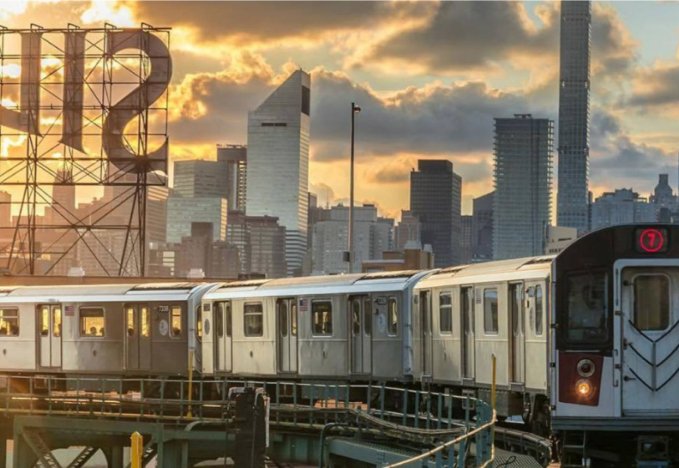
Reducing Fare Evasion in the NYC Subway
UrbanSense partnered with the NYC Mayor’s Office of Criminal Justice to understand the underlying issues leading to rising subway fare evasion.
discover more of Our Services

Product Development & Deployment
Collaboration on vendor selection, prototyping, and deployment of modern building and operational systems and public realm technologies.

Project Management
Efficient management and implementation of projects from ideation to execution, ensuring on-time, on-budget delivery.

Service delivery Redesign
Business requirements gathering, process analysis, and current and future state workflow design to reimagine service delivery, improving efficiency, alignment, and overall performance.